
Our garages are guarded by an underrated hero – the humble garage door. These sturdy barriers protect our vehicles, shield our stored items, and confer a sense of safety. Yet, when caught in the grip of malfunction, they can transform into an annoying hindrance. A pivotal factor in ensuring your garage door performs its duties without a hitch is the appropriate setting of its springs. This simple guide will illuminate the significance of ideal spring tension and share valuable insights on handling garage door springs for professionals and homeowners alike.
The Lowdown on Garage Door Springs
Think of the springs in your garage door as the essential cog in this machine. They balance the door’s weight, simplifying its opening and closing. Two primary types of springs run the show – torsion and extension. Torsion springs, affixed atop the door, twist to fabricate tension. Extension springs, on the other hand, extend along the door sides to provide the requisite force. If you’re dealing with a garage door spring repair in South Florida, understanding these mechanics is crucial.
When a spring is impeccably calibrated, it allows seamless door movement, maintains balance, alleviates strain on the opener, and prolongs its longevity. Conversely, a misadjusted spring can breed a myriad of problems ranging from accelerated wear and tear, noise pollution to potential safety risks. This makes knowing how many turns on a garage door spring vital for maintenance.
The Correct Number of Turns
For those delving into garage door maintenance, determining the appropriate garage door spring number of turns is paramount. Torsion springs, in general, necessitate a specific count of turns to achieve the optimal tension. This count could vary contingent on the door’s weight, size, and spring type. Let’s break down the steps to decipher the correct number of turns:
- Recognize the Spring Type: Clear your ambiguity around whether you’re dealing with a torsion or extension spring upfront. This knowledge will shape your approach and the needed turns. You might consult a winding chart garage guide for guidance.
- Refer Manufacturer’s Manual: Almost all garage door springs come with manufacturer directives that elaborate on the desired number of turns. Always circle back to these instructions for precision. Using a garage door spring turn calculator might also help ensure accuracy.
- Ascertain Door Weight and Size: Utilize a garage door scale to gauge the door’s weight. This data coupled with the door size will guide you in computing the necessary tension. When working with a double spring garage door, knowing the answer to ‘how many turns on a double spring garage door?’ becomes essential.
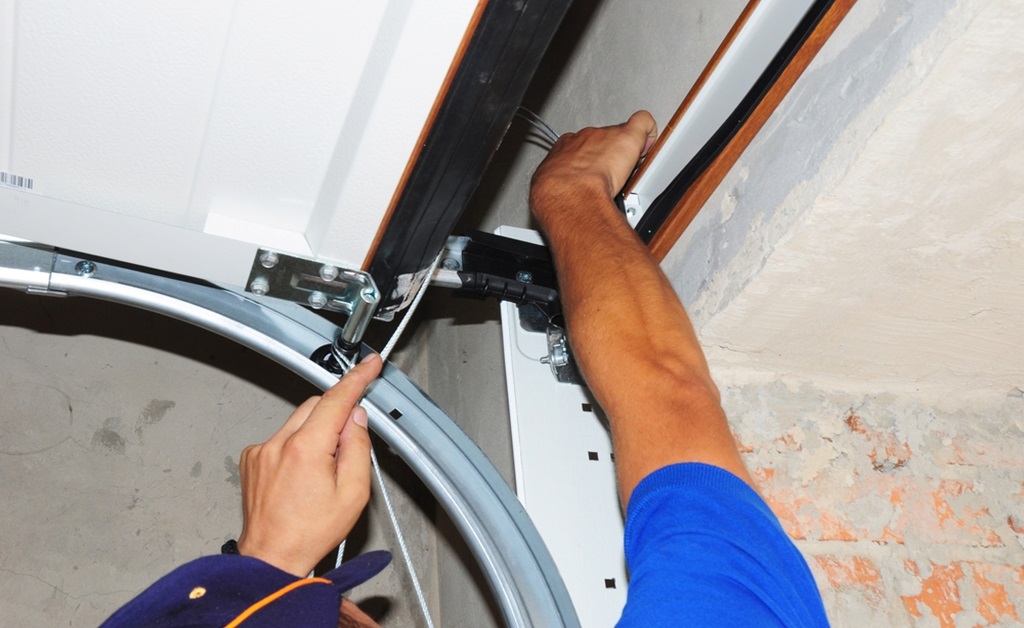
- Incrementally Adjust Turns: Equip yourself with the right tools and progressively increment the spring turns, continuously assessing the door’s balance and movement. Fine-tune as required until the door functions smoothly. A garage door spring turn chart can be incredibly useful here.
Recognizing Symptoms of Spring Maladies
Homeowners must be adept at recognizing red flags indicating spring issues to ensure timely repairs and dodge grave snags. Look out for the following symptoms that hint at your garage door springs being misaligned or worn down:
- Inconsistent Door Movement: Anomalies in the door’s movement or unusual heaviness suggest springs might be incorrectly tensioned. You might need to reference a door torsion spring turn chart, as mentioned previously.
- Noticeable Wear and Tear: Regularly inspect the springs for signs of rust, gaping, or stretching, signaling potential problems.
- Odd Sounds: Uncharacteristic squeaking or banging noises during operation could indicate the springs are excessively tense or misaligned. Garage door springs – how many turns? Find the answer and you might just prevent these issues.
- Resort to Expert Help: When in doubt, resort to expert intervention. If you’re not confident about handling spring adjustments independently, engage professional garage door repair services. They are equipped with the knowledge and tools to safely manage garage door spring turns.
Wrapping Up
Attaining the correct number of turns on a garage door spring is elemental for its efficient functioning and safety. Whether you’re a professional or a homeowner, a deep understanding of garage door spring mechanics can empower you to proactively ensure flawless performance of your garage door. Remember, expert help is just a phone call away when you’re uncertain. Stay safe, and preserve the optimal condition of your garage door!