
Garage door openers are intrinsic components of numerous households, providing comfort, protection, and effortless entrance to your garage. Yet, as with any technologically advanced gadget, these mechanisms require regular upkeep for flawless performance. A frequently posited question by homeowners and property managers pertains to the existence of batteries in garage door openers, and the function they play.
The Operations of Garage Door Openers
Garage door openers are mechanized contraptions that simplify the opening and shutting of your garage door. The press of a remote control or wall-mounted button prompts the opener’s motor, commanding the garage door along a metal pathway. The opener typically encompasses a motor, a trolley, and an arm affiliated with your garage door.
These mechanisms hinge on the electrical power from your house’s wiring system. However, remote controls, keypads, and backup systems introduce another tier of intricacy, prompting the question of ‘do garage door openers need batteries?’ A deeper investigation into potential usage of batteries is therefore necessary.
The Battery Question
Indeed, garage door openers make use of batteries, albeit not all components depend on them. Let’s delve deeper:
Remote Controls and Keypads
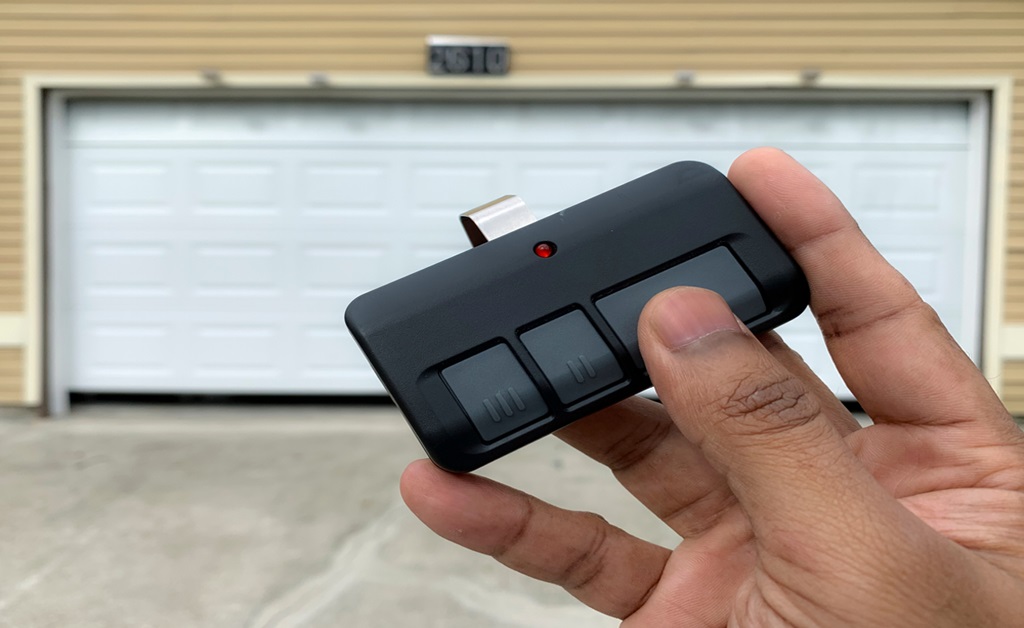
These devices are typically powered by batteries, establishing communication with the garage door opener receiver using radio signals. A steady power source is crucial for their steady functionality. Does my garage door opener have a battery? The answer is yes, as the remote and keypad rely on this power source. Battery life generally spans one to two years, hinging on usage.
Battery Backup Systems
Some openers are armed with a battery in a garage door opener system, particularly beneficial in regions prone to power interruptions. This ensures operability of the garage door even in the face of power loss. These rechargeable batteries are sheltered within the opener unit. Battery-operated garage door openers are increasingly common, as modern systems include battery backups as a standard or optional feature, offering homeowners tranquility during emergencies.
However, not all garage door openers come with a battery backup system—this is contingent on your specific model and brand. If this is a critical feature for you, it’s recommended to peruse your owner’s manual or the manufacturer’s website for confirmation. If you’re in need of garage door repair in Port St. Lucie, FL, it’s helpful to check whether your opener’s backup system is functioning correctly.
Detecting Battery-Related Problems
Batteries have a finite lifespan, hence the importance of recognizing signs of battery issues to evade unexpected inconveniences. Unresponsive or inconsistent functioning of your remote or keypad may indicate a dwindling battery. Typically, a fresh battery will rectify the issue.
For openers with battery backup systems, heed warning lights or messages on the control panel. These are designed to alert you when the backup battery requires replacement or recharging. Inconsistent or lethargic operation during a power outage also suggests that the backup system may be deficient in charge.
Do garage door openers have batteries? Indeed, these systems depend on batteries to maintain functionality during electrical interruptions. Observance of these signs merits consultation of your owner’s manual for guidance on battery replacement or maintenance. Specific types of batteries are generally required and are readily accessible at local hardware stores or online.
Maintaining Reliability of Your Opener
Comprehending the role of batteries in your garage door opener ensures dependable functionality, whether you’re embarking on a hectic day or returning home on a drizzly evening. Regular scrutiny of your remote controls, keypads, and backup systems assures optimal performance. If your garage door opener lacks a battery backup, contemplate upgrading to a model that incorporates it for improved convenience and security. With so many homeowners wondering, ‘do garage openers have batteries?’, it’s clear that staying informed is key to maintaining your system’s reliability.