
A loud and jerky garage door is more than just an annoyance. It can be an indication that your biggest appliance at home needs some serious TLC. We have often advised our customers that it is longevity that can be achieved with regular maintenance, and that your garage door is no different. If you’re looking for expert help, consider garage door repair in Weston. A little bit of lubrication, and you will be good to go.
Do You Need to Lubricate?
Determining when your garage door needs lubrication can be made easy as long as you observe it on a daily basis. If you’re wondering how to lubricate a garage door, the first sign that your garage door needs lubrication will be noted by sounds. When you open and close your garage door, and it makes sounds such as squeaks, grinds, and rattles as it moves, it could be an indication that it needs lubrication.
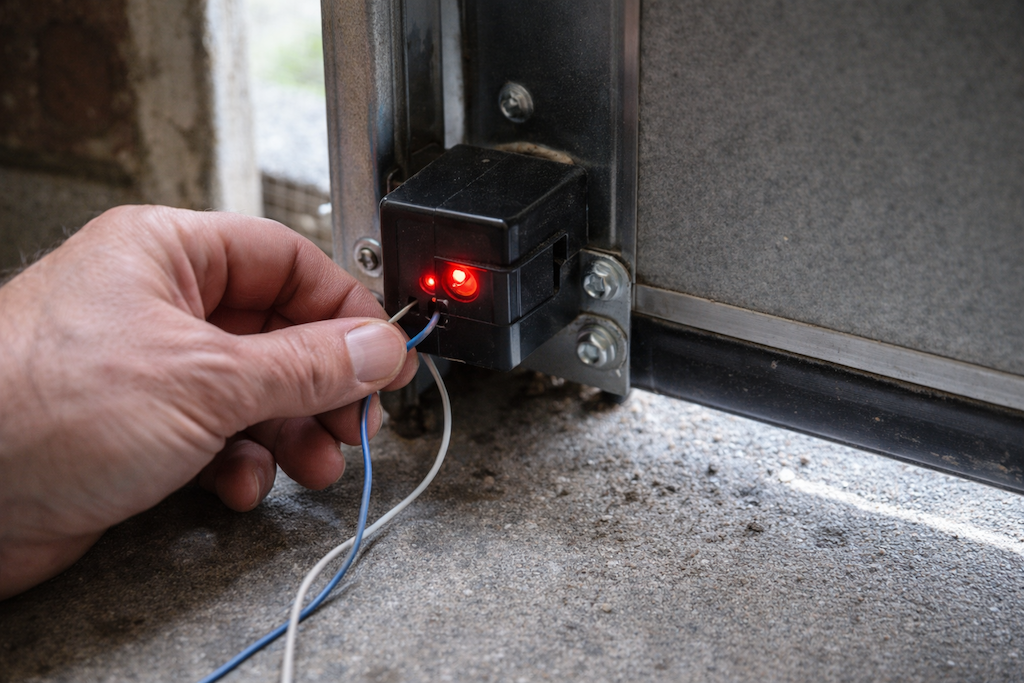
In addition to these auditory signals, you can also observe the door movement. A well-lubricated door should move with some smoothness and should not jerk or get stuck. When a door moves with some unevenness, as if it struggles at various points when it moves, it might be finding it hard because of dried-out components. You can check the door movement yourself. Just observe your door and see if there are any rust on the wheel or hinge area or if springs are dried up. To ensure optimal performance, it’s important to lubricate a garage door whenever you notice these signs.
What Happens When You Don’t Lubricate?
Not addressing the lubrication needs can result in a chain reaction of issues that may eventually necessitate a service visit from our team. The problem with not lubricating a garage door is that if it’s neglected, friction poses a challenge to mechanical components. When metal rubs against metal without any lubrication, it deteriorates at a much higher rate. As metal deteriorates at a much faster rate, it may lead to rollers seizing, hinges breaking, and bearings failing.
The strain does not end there with the small hardware. When it becomes hard to move your garage door, it becomes more laborious work for your garage door opener. Moreover, the springs with heavy tensions will be more vulnerable to breaking due to a lack of lubrication. When these springs break, it becomes hazardous and your garage door becomes unfunctional. As a result, garage door repair and maintenance become essential matters. You’ll need to hire professionals for these services, like our brilliant team at Top Service Garage Door Repair.
Basic Lubrication Process
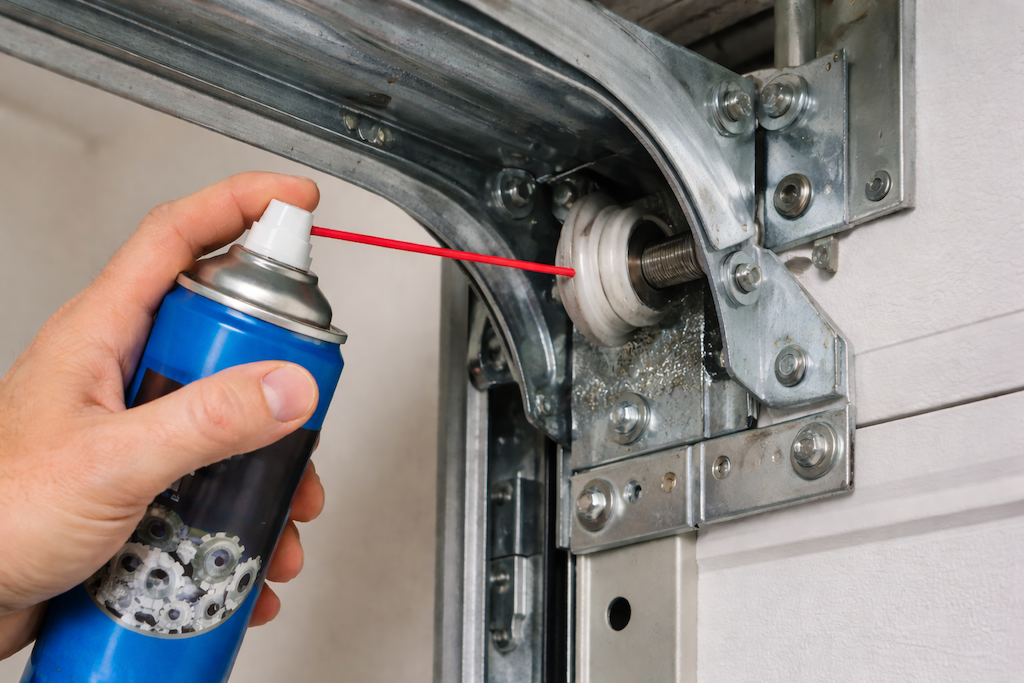
A garage door lubrication job that you can tackle as a homeowner requires some basic materials. You will need to buy a good garage door lubricant. You can either use a silicone spray lubricant or some white lithium grease. We would recommend against using either a degreaser or a penetrating oil lubricant. Both will attract dirt and mess up your garage door.
First, make sure you close the garage door and unwind it from its opener. Then, clean the tracks with a cloth and remove any debris. If you’re wondering where to lubricate a garage door, spray your lubricant directly at these moving components: your steel rollers (ball bearings), your door hinges, and your lift cables at the bottom edge of your door. Also, take a moment to lightly lubricate your torsion springs above your door if you have these.
Protecting Your Home and Reducing Noise Levels
It would be worth your while to set aside twenty minutes every so often and lubricate your garage door. It will be worth it when you get a quieter home, a smooth-running garage door, and the satisfaction that your investment will be safe. We would be glad to assist you if you should experience some problems with your garage door while you are doing your checkup or if it still continues to make noise after your lubricating!