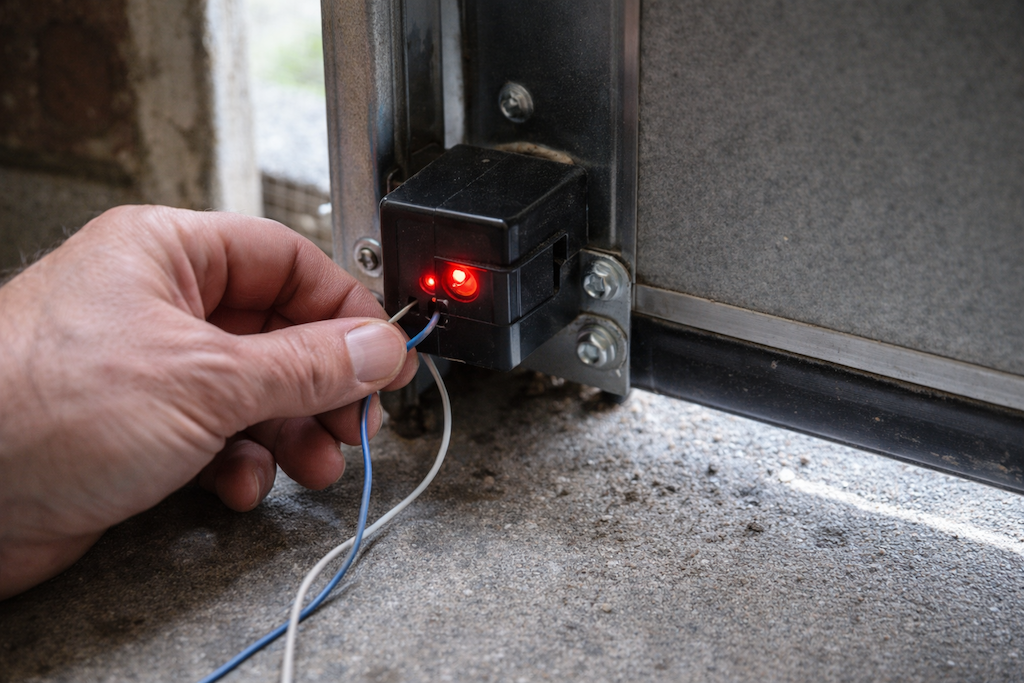
Your garage door hums along with its day job silently, moving up and down with a touch of a button. However, behind this smooth functionality is a vital component that most homeowners hardly appreciate: the sensors of a garage door. Small yet effective, they ensure that your door does not shut down on a person, an animal, or anything that lies on the ground.
Can garage door sensors go bad? The quick answer is yes—sensors for a garage door will and do break with time. Recognizing when that happens along with how to spot it will enable you to avoid possible hazards as well as costly repairs down the line.
Warning Signs that Your Sensor for Garage Doors Failed
There are a variety of telltale signs that point to the possibility that your sensors for a garage door might be misaligned. The most noticeable sign is if your door cannot close. It will begin descending but change direction and spring back open, even if nothing is in its way.
Another typical problem is inconsistent functionality. It closes fine some of the time but not others, so it is a hit-or-miss situation. Do garage door sensors go bad and cause this? Yes, this is most frequently a sign of sensors that must be replaced sooner rather than later.
You will also notice sensor lights acting abnormally. There is nothing abnormal if sensors normally show stable lights with one red and one green. However, if they start flickering suddenly, turn off, or display colors that don’t belong, your sensors need servicing for sure.
Certain garage doors will close while you’re pressing on the wall button. Even though this bypass mode is a feature for emergencies, if you’re frequently using it, it simply indicates sensor problems that must be addressed sooner than later. If you’re in a pinch, emergency garage door repair may be needed.
What Makes Garage Door Sensors Not Function Properly?
Environmental conditions contribute a great deal to sensor dysfunctions. Scorching summers or freezing winters might make interior components irreparably damaged. Rainstorm or snowstorm water or uncontrolled humidity might corrode wires or disrupt electronic functions of sensors.
Another common culprit is physical damage. Bumps from garden equipment, bikes, or even active kids will loosen sensors or break their protective covers. Even slight misalignment will make the invisible beam between sensors ineffective.
Debris, dirt, and dust that gather on sensor lenses cause interference problems. Spider webs, leaves, or dirt pileup might become opaque to signals between sensors, so they simply wind up reporting false obstacles. A bad garage door sensor can result from these issues over time.
The age itself will result in sensor failure. The average lifespan of most garage door sensors is around 10 to 15 years with proper servicing. Electronic units with time become less dependable and subject to unexpected breakdowns.
Repair or Replace: When to Make the Call
Whether to replace or repair defective sensors depends on a range of factors. Small issues related to misaligned sensors, dusty lenses, or loosely attached electric wires most commonly require minor adjustments or a simple fix for garage door sensors like cleaning.
But sensors showing any kind of body damage, rusting, or aging-related wear normally need replacement. It would be dangerous for safety and more expensive to repair severely damaged sensors later than to install new ones.
If sensors approach or exceed their estimated lifespan, replacement is more economical than repeated repairs. Newer sensors also provide more reliability along with additional safety features that older systems cannot match.
Keeping a Safe and Functional Garage
Garage door sensors are your best accident and injury preventers. They must be periodically checked for operability and replaced regularly to maintain functionality. But replacement is inevitable for most systems, despite periodic checks and servicing.
If you notice early warning signs, deal with them before they escalate. A defective sensor today might be a hazard tomorrow. When in doubt, consult a professional garage door service expert to evaluate your system and provide the best solution for your specific situation. Whether it’s a replacement or emergency garage door repair, acting promptly can make all the difference.