
Garage door sensors are a critical safety feature that enables your garage door to open and close without injuring people, animals, or property. With time, however, sensors can malfunction and make the safety feature less effective. Fortunately, you can test garage door sensors to check that everything is in order. In this article, we guide you through how to test garage door sensors, how to fix common malfunctions, and when to call the professionals.
Why It’s Important to Test Garage Door Sensors
Garage doors are likely some of the most heavy-duty moving machinery in your home. Without malfunctioning safety sensors, you would have the door hitting into things, cars, or worse–animals or individuals. The safety sensors make the door halt and reverse when it has an obstacle in front of it, saving property and loved ones.
Checking your garage door sensors allows you to detect and fix potential issues prior to them becoming outright dangers. This type of maintenance isn’t just excellent at trying to save you, but also at extending the life of the mechanical components of your door. If you’re unsure where to start, how do you test garage door sensors? We’ll show you step-by-step below.
The Simple Step-By-Step Guide to Test Your Sensors
You do not have to be a specialist to check your garage door sensors. You can test your sensors to see if they are working by doing the following.
Step 1: Locate the Sensors
Garage door sensors are typically installed on either side of the door, six inches off the floor. The two small boxes send out an infrared beam to keep it unbroken in order that the door can be safely used. Clean and make sure the sensors are dust- and dirt-free and then test.
Step 2: Break the Beam with an Object
Open the garage door completely. Place a solid object, like a cardboard box, directly across the sensor beam. The sensors must detect the obstruction and prevent the door from closing. It’s easy to test this by trying to close the door from a distance by pressing the remote door control. If the door instantly reverses on the spot, the sensors are likely functional.
Step 3: Verify the Indicator Lights
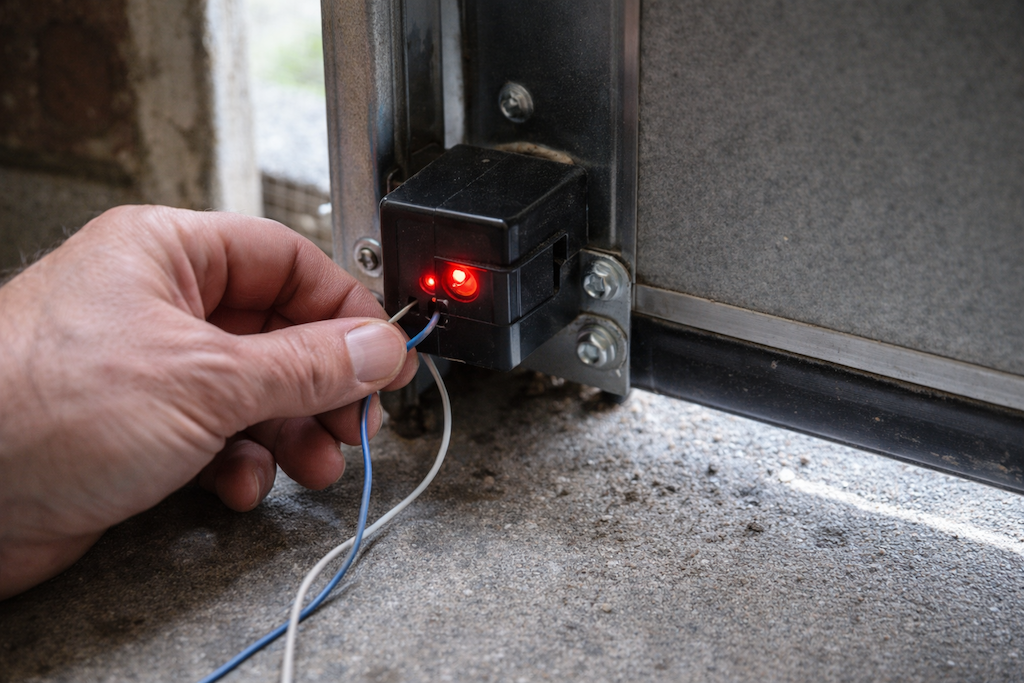
LED lights on the majority of garage door sensors indicate if they are working. The two lights are solid, probably green, when aligned. Misalignment or a wiring problem can be indicated if either light is flashing or completely dark. If you encounter any problems, it might be time to consider garage door sensors troubleshooting or consulting a professional.
Repairing Common Garage Door Sensor Issues
Although when they are tested periodically, garage door sensors occasionally malfunction. Some of the most frequent problems and their solutions are described below:
Misaligned Sensors
The sensors should be placed in such a way that they are able to talk to one another. When a sensor is knocked out of align or misplaced, the infrared beam is interrupted. This can be corrected by slowly moving the sensor until the light no longer blinks but is constant.
Dirty Sensor Lenses
Dirt, cobwebs, or anything else on the lenses may block the sensor beam and register as a false blockage. Clean the lenses with a dry, clean cloth to ensure that they are clean and functioning. Now you know how to check garage door sensors, you’ll know when something is amiss.
Wiring Issues
Sensor wires to the garage door opener can get frayed or lose their connection over time. Check the wires for evident damage and tighten loose connections. If the damage is severe, it’s better to get it repaired professionally. For those living locally, services specializing in garage door repair in Palm Beach Gardens can help restore your system in no time.
When to Call a Garage Door Expert
Even when you can do minor fixes like cleaning lenses or realignment, any other more severe issues will require professional attention. When your sensors keep malfunctioning or your door is operating unusually, a garage door professional will have the ability to diagnose and repair the system. Professionals are particularly necessary when working with electrical components or broken wires, for safety and longevity.